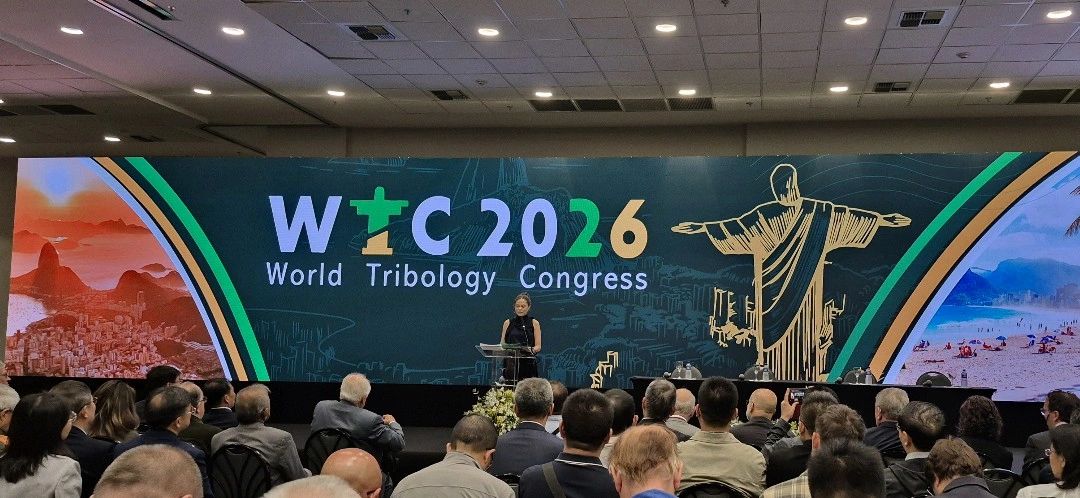
WTC 2026 Brazil – Le LTDS bien représenté !
WTC 2026 : First Place in the Forum Young Tribologist – Best Image Award for Paul Marie Zubieta Laborde
Pour son image intitulée « Solution origin: A tribological synapse », présentée lors du 8e Congrès mondial de tribologie (WTC 2026), qui s’est tenu du 20 au 25 septembre à Rio de Janeiro, au Brésil.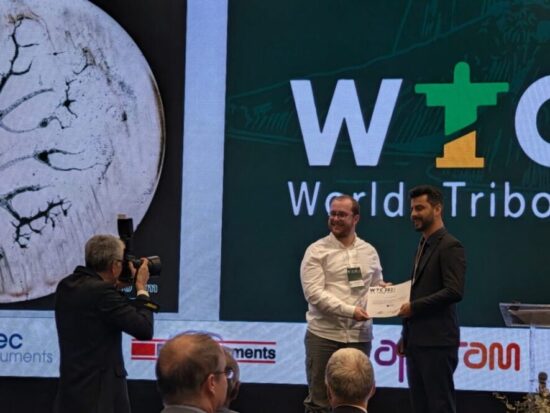


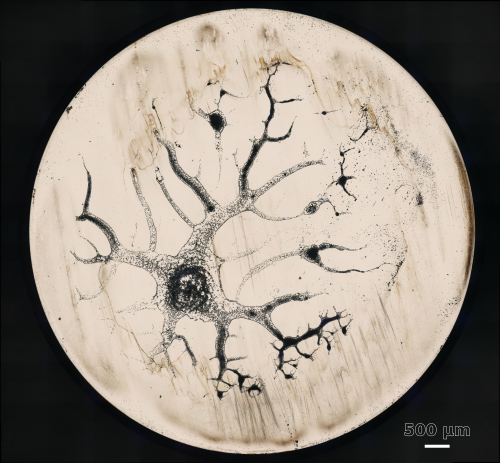
Solution origin: A tribological synapse
PM Zubieta-Laborde1*, G L.W. Cross2, G S. Duesberg3, F Dubreuil1, M.I De Barros Bouchet1
1) Ecole Centrale de Lyon, CNRS, ENTPE, LTDS UMR 5513, 69130 Ecully, France
2) Trinity College, CRANN, Dublin 2, D02 W085, Ireland
3) Institue of Physics, Faculty of Electrical Engineering and Information Technology, Univ. der Bundeswehr München
*Corresponding author: paul-marie.zubieta-laborde@ec-lyon.fr
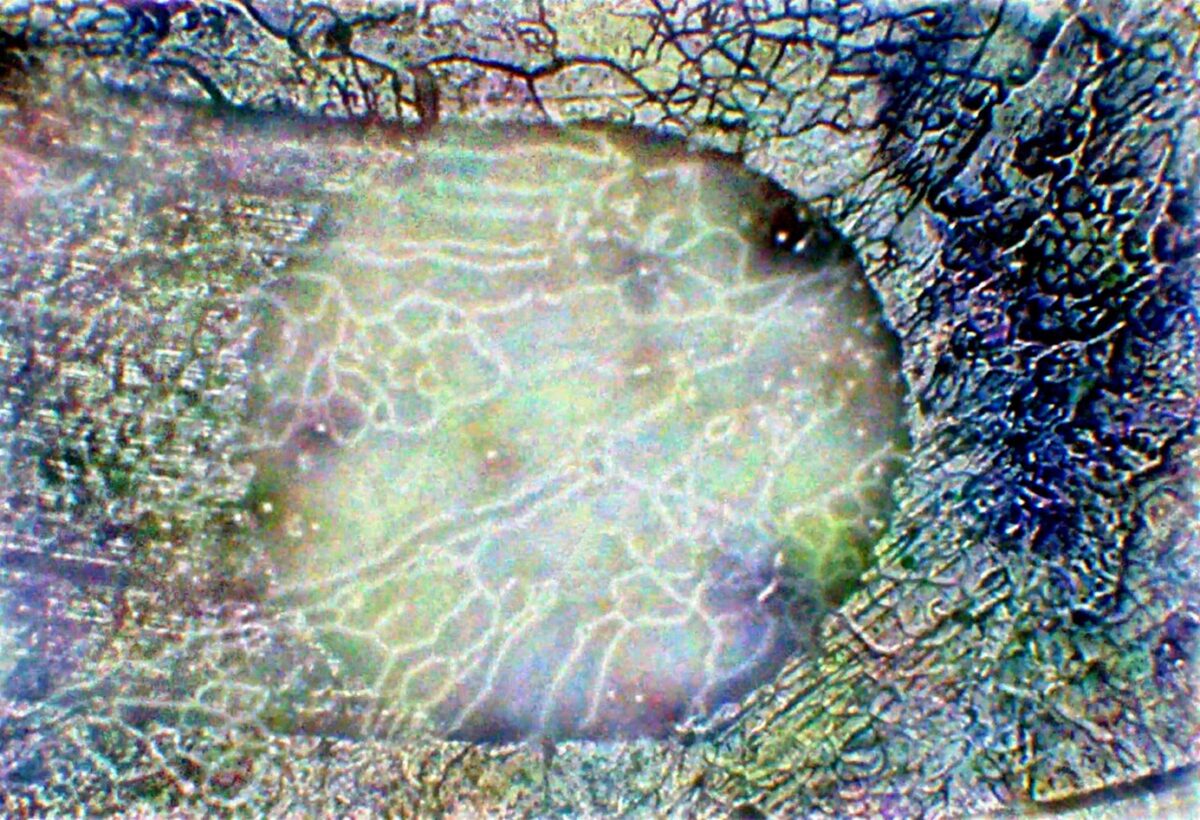
What is intelligence? It is a question asked since the dawn of civilization. From the pictorial drawings of proto-humans to today’s smart engineering, we have all been bound by one common feature: the brain. Dreaming, inventing, and critical thinking give the human species its uniqueness. Cogito, ergo sum, as taught by the French philosopher Descartes. But where does consciousness come from? Psychology and medicine have suggested that the brain is the seat of the human soul. I believe scientists still have much to learn from philosophical methodology. In the past, when science was less specialized, researchers combined fundamental science and abstract reasoning. Benjamin Franklin, Pascal, Leibniz, Aristotle, and Leonardo da Vinci, whose influence extends to tribology, embodied this unity. Through this approach of analyzing elementary building blocks of phenomena, I wish to pay tribute to what makes humans special: synapses. They are responsible for making me angry, proud, or happy about my research. The image presents an optical micrograph of a steel flat after a friction test against a sapphire window, lubricated by 5 µm pyrolytic carbon-coated silicon particles. The naturally organized
particles form interconnected junctions reminiscent of neuronal synapses. These structures emerge from friction-driven self-organization, contributing to friction reduction and illustrating how functional complexity can arise spontaneously in tribological systems. In tribology, reducing friction and mitigating wear is considered the holy grail. I find it poetic that simple experiments can reveal structures that echo life itself. That is why I am proud to present.WTC 2026 : Juliette Cayer-Barrioz, Lauréate du prix Peter Jost 2025
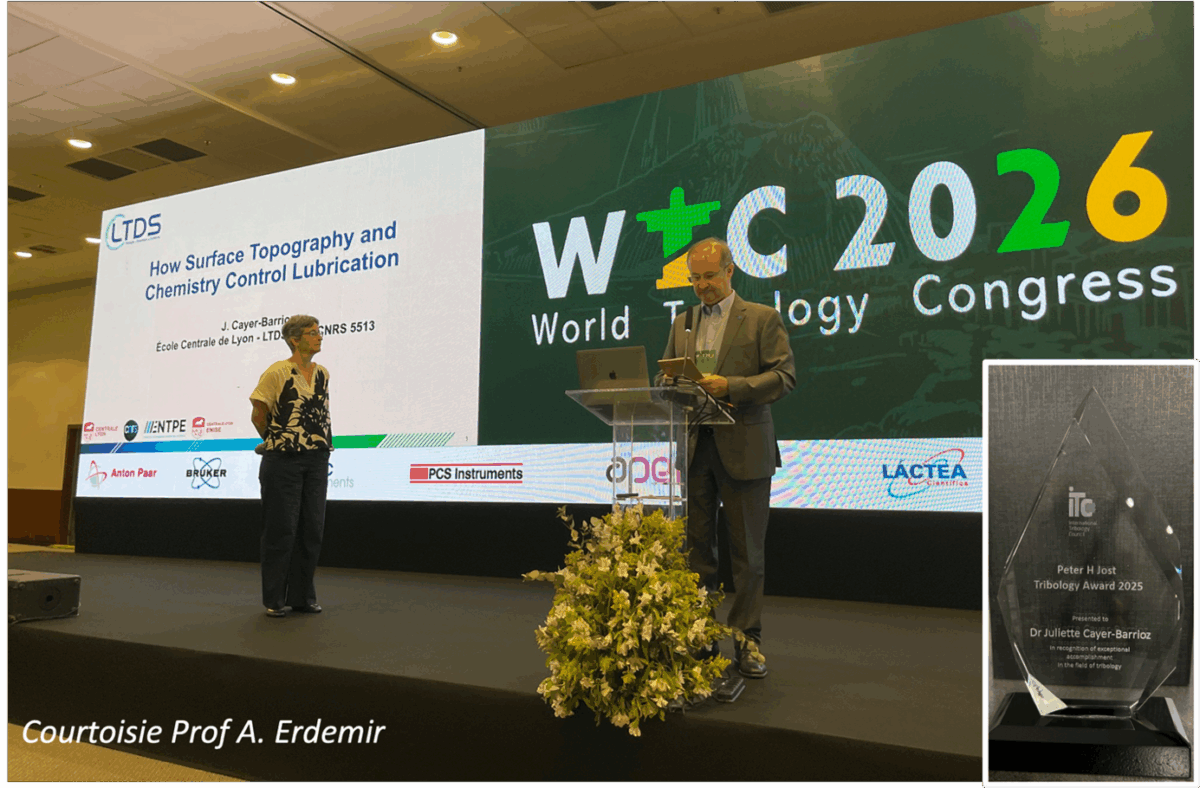
Lors de cet événement mondial en tribologie, Juliette Cayer-Barrioz a présenté ses travaux de recherche en conférence plénière honorifique sur le rôle de la topographie et de chimie de surface sur les mécanismes de lubrification et de réduction du frottement.
Le prix Peter Jost 2025 lui a été remis à l’issue de sa présentation scientifique.
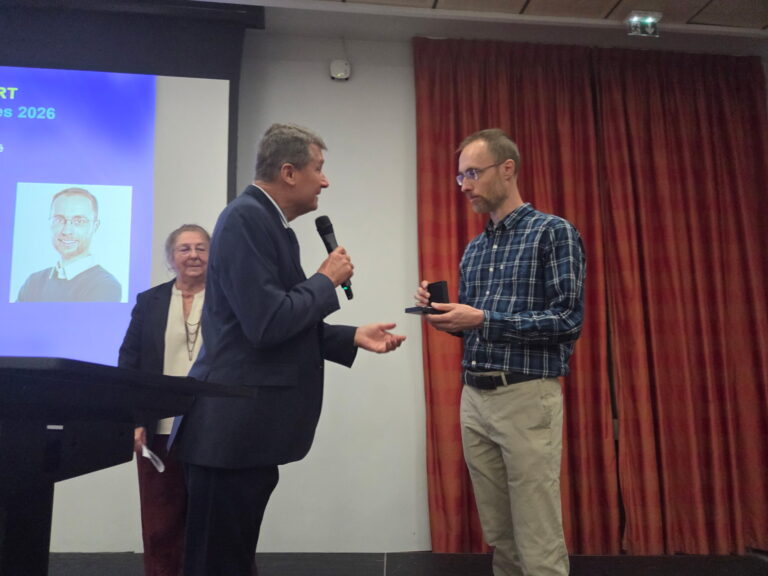
Félicitations au Dr Anderson Dalavale Kaiser Pinto, un jeune tribologue talentueux pour son prix d’image scientifique !
L’image scientifique « How Contact designs the Shape of Water » a été récompensée lors du WTC 2026 pour son fantastique prix d’image de contact en caoutchouc de glace ! Cette image, issue du travail de doctorat de Dr Anderson Dalavale Kaiser Pinto, représente une visualisation in situ in operando d’un contact glissant caoutchouc/glace à -4°C.
Double diplômé en ingénierie mécanique, à la fois au Brésil et en France en 2020, A. Dalavale Kaiser Pinto a soutenu son doctorat à Centrale Lyon en tribologie en 2025. Ce travail est le produit d’une collaboration internationale avec Tohoku University et Keio University, Japon et le LTDS, France en partenariat avec M.F.P. Michelin (ANR-20-JSTN-0001-01).
Dernières
Actualités
 Actualités
Groupe Paris-Lyon : la soirée des talents honore six lauréats dont le LTDS
Lire l'article Actualités
Fête de la Science : à Centrale Lyon
Lire l'article Actualités
Félicitations à Clément Gbakpoma pour le prix du meilleur article
Lire l'article Actualités
Prix du meilleur poster Leeds-Lyon
Lire l'article Actualités
Retour sur les JADH – Prix ICARE
Lire l'article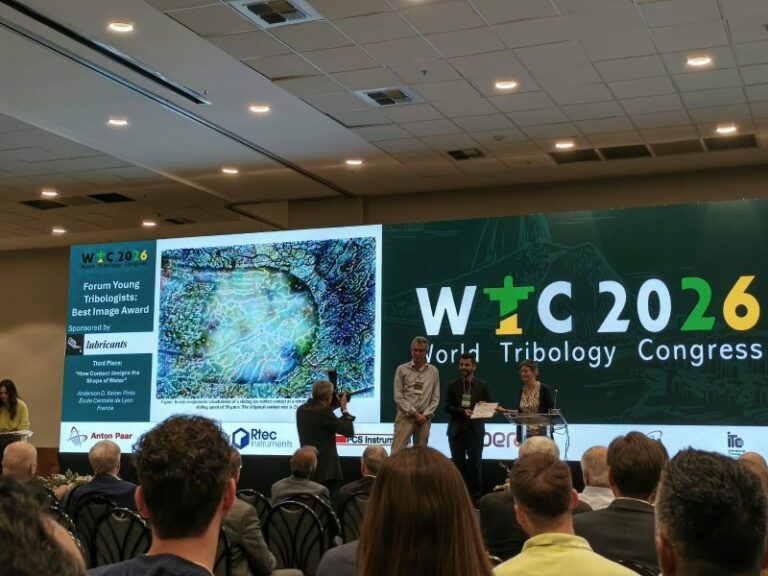 Actualités